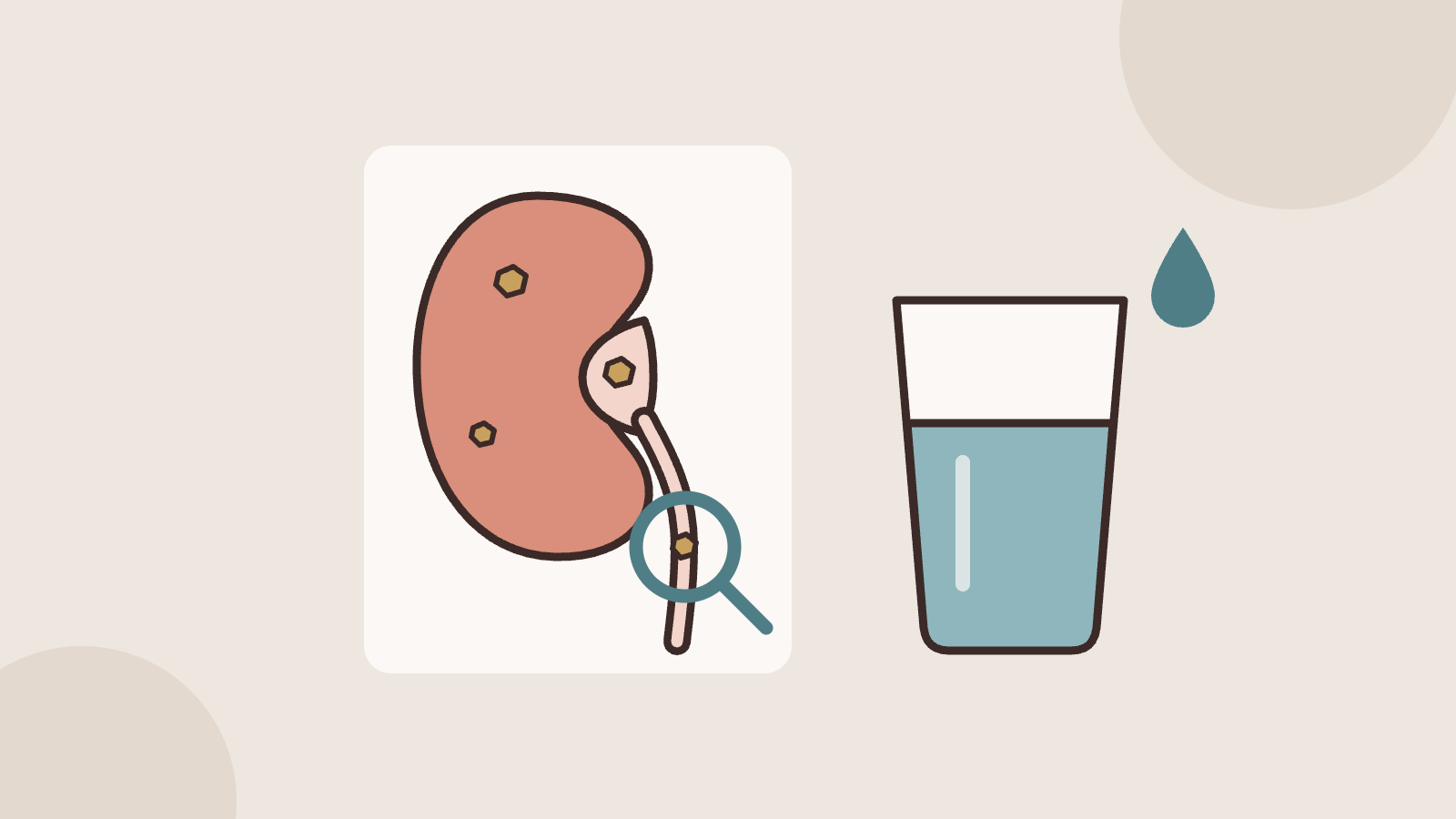
Renal colic is one of the most intense kinds of pain there is, and many people experience it at some point. The good news is that today most kidney stones are treated without open surgery, and many do not need any procedure at all. Here is how to recognise them, when to go to A&E and what treatment options exist.
What are kidney stones?
They are small crystal formations, usually made of calcium salts, that build up in the kidney when urine is too concentrated. They are very common: roughly one in ten people will have one at some point in their life, and anyone who has had a stone is more likely to form another.
Common symptoms
- Severe pain in the lower back, on one side, that may spread to the abdomen or groin (renal colic).
- Nausea and vomiting.
- Blood in the urine, visible or found on a urine test (see also blood in the urine: causes and when to see a doctor).
- Frequent urge to urinate or a burning feeling, when the stone is close to the bladder.
Many small stones cause no symptoms and are found by chance on an ultrasound scan.
When to go to A&E
- Colic with fever or chills: this may mean a blocked, infected kidney, which is an emergency.
- Pain that does not improve with painkillers.
- Vomiting that stops you drinking or taking your medication.
- Being unable to pass urine, or having only one kidney and getting colic.
How is it diagnosed?
Ultrasound is a good first test. A low-dose CT scan without contrast is the most accurate: it shows the size, position and density of the stone, all key to choosing the treatment. Blood and urine tests complete the picture.
Does it always need surgery? No
Small stones (generally under 5 mm) usually pass on their own within a few weeks, with pain relief, good hydration and, in some cases, medication that helps them pass. Treatment is advised when a stone does not pass, the pain keeps coming back, it blocks the kidney, there is infection, or the stone is large or growing.
Today’s techniques are minimally invasive:
- Laser ureteroscopy: the stone is reached through the natural urinary tract, with no incisions, and broken up with a laser. Patients usually go home the same day or the next.
- Shock wave lithotripsy: breaks the stone from outside the body; useful for some small or medium kidney stones.
- Percutaneous nephrolithotomy: through a small incision in the back, for large stones (usually over 2 cm).
The choice depends on the size, position and hardness of the stone, and on each patient. More information on my page about kidney stone treatment.
How to stop them coming back
- Drink enough water to keep your urine pale: as a guide, aim to pass about 2–2.5 litres of urine a day.
- Cut down on salt and ultra-processed food.
- Do not cut calcium out of your diet: eating dairy normally helps prevent the most common stones.
- Keep red meat and animal protein in moderation.
- If stones keep coming back, have a metabolic work-up (stone analysis and a 24-hour urine test) to tailor prevention to you.
This article is for information only and does not replace a medical consultation.
Had renal colic, or been told you have a kidney stone? Book an appointment and we will find the best option together. Consultations in English, Spanish and Russian at Fundació Puigvert, Barcelona.